Follow TNGB
Trump Orders Partial Troop Withdrawal from Syria

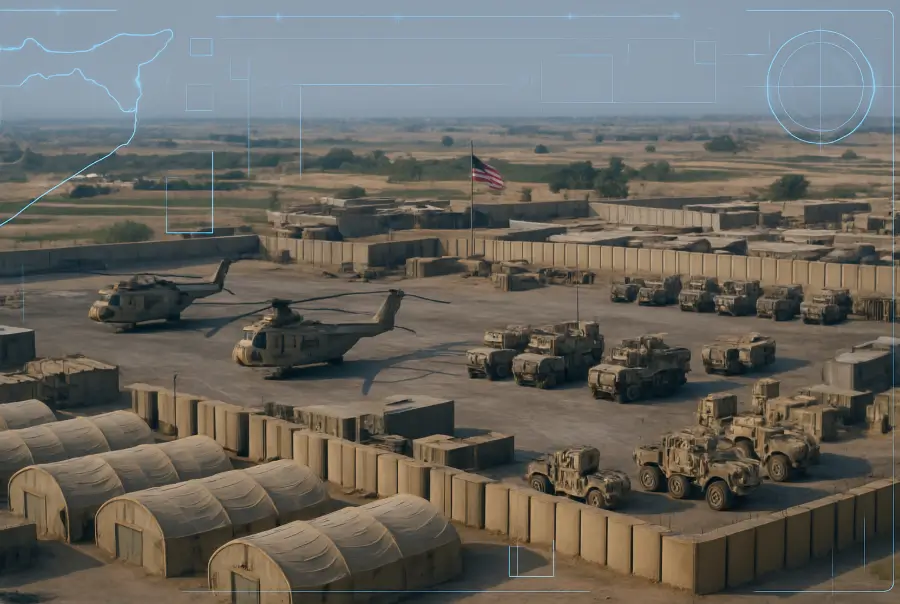
President Donald Trump has directed the withdrawal of several hundred U.S. troops from Syria, reducing the American military presence in the region by roughly half. The decision, announced by the White House, aligns with Trump’s long-standing pledge to scale back U.S. military engagements abroad.
Approximately 2,000 U.S. troops are currently stationed in Syria, primarily in the northeast, supporting Kurdish-led Syrian Democratic Forces (SDF) in their fight against Islamic State (ISIS) remnants. The Pentagon confirmed that the drawdown will involve about 1,000 personnel, leaving a smaller force to maintain counterterrorism operations.
Trump’s move comes amid a shifting Syrian landscape following the fall of Bashar al-Assad’s regime in December 2024. The new interim government, led by Ahmed Sharaa, has pledged to unify the country, but regional powers like Turkey and Israel are vying for influence, complicating U.S. strategy.
The White House described the withdrawal as a “realignment” to prioritize American interests while ensuring ISIS does not resurge. Defense Secretary Pete Hegseth emphasized that a residual force will remain to secure key oil fields and monitor extremist activities.
Critics, including some Republican lawmakers, warn that reducing troops could embolden Turkey to expand its control in northern Syria, potentially threatening Kurdish allies. Others argue it risks creating a power vacuum that ISIS could exploit, as the group has reportedly increased attacks in eastern Syria.
Israel has expressed concern over the drawdown, with Prime Minister Benjamin Netanyahu stating that a diminished U.S. presence might allow hostile forces to gain ground near its borders. Israeli forces have already occupied parts of southern Syria to counter such threats.
Supporters of the decision, including many in Trump’s base, praise it as fulfilling his “America First” promise to bring troops home. They argue that Syria’s conflicts are not America’s responsibility and that resources should focus on domestic priorities like border security.
The Pentagon has not specified a timeline for the withdrawal but indicated it will be phased over several months to ensure stability. Discussions with allies, including the SDF, are ongoing to coordinate the transition and maintain pressure on ISIS.
Regional analysts note that Turkey’s growing influence, particularly its support for Syrian National Army militias, could reshape northeastern Syria. Ankara has long viewed the SDF as a terrorist group due to its ties to Kurdish factions in Turkey.
The withdrawal also raises questions about the future of U.S. humanitarian aid to Syria, which Trump has partially suspended. European allies, focused on supporting the new Syrian government, have urged Washington to maintain some involvement to prevent further instability.
This decision marks Trump’s latest attempt to reduce U.S. military commitments in Syria, following unsuccessful efforts during his first term. Whether it achieves his goal of disengagement without destabilizing the region remains uncertain.