Follow TNGB
Carney Rejects Trump’s 51st State Idea at White House

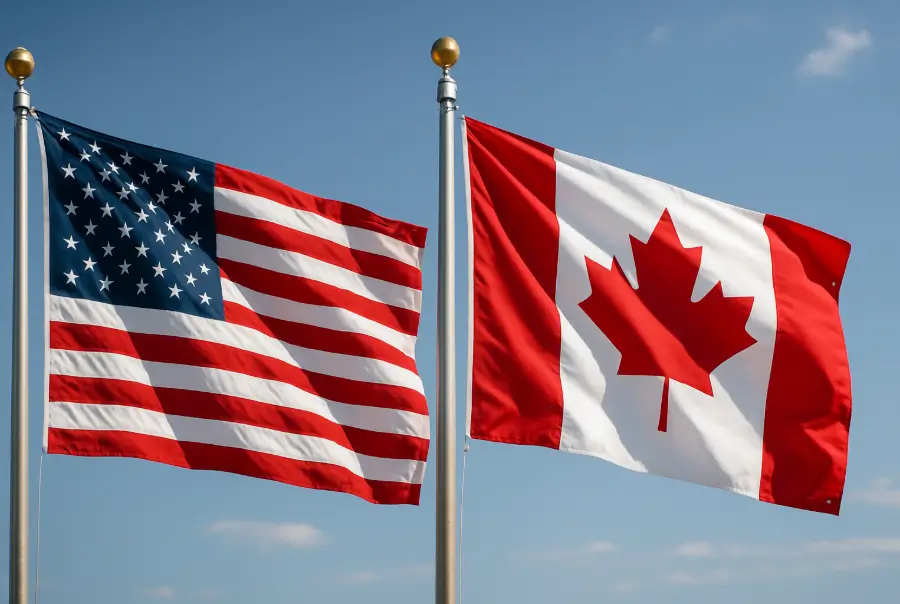
Canadian Prime Minister Mark Carney firmly declared that Canada is not for sale during a tense meeting with U.S. President Donald Trump at the White House. The talks, centered on trade disputes and tariffs, were overshadowed by Trump’s repeated suggestions that Canada could become America’s 51st state.
Carney, visibly uneasy, emphasized Canada’s sovereignty after months of campaigning against Trump’s rhetoric. He stated that he had consulted with Canadians during his recent election, reinforcing that the nation would never be absorbed by the U.S.
Trump, in response, quipped, “Never say never,” maintaining his provocative stance on annexation. His comments followed a pattern of touting potential tax cuts and military benefits for Canadians under U.S. statehood.
The meeting came amid a heated trade war, with Trump imposing 25% tariffs on Canadian goods like steel and aluminum. Canada retaliated with $42 billion in tariffs on U.S. products, straining the economic ties between the two nations.
Carney pushed for revisions to the U.S.-Mexico-Canada Agreement, arguing that Trump’s tariffs exploit its current structure. He called the agreement a starting point for broader negotiations but insisted changes are necessary to protect Canadian interests.
Trump downplayed Canada’s economic leverage, claiming the U.S. does not rely on Canadian cars, energy, or lumber. He stressed that Canada benefits more from the trade relationship, citing the $45 billion U.S. trade deficit with Canada in 2024.
Despite the friction, both leaders expressed a desire to reset bilateral relations. Carney flattered Trump as a “transformational president,” while Trump praised Carney’s election win as a historic comeback.
The talks highlighted deeper tensions, with Carney seeking to diversify Canada’s trade partnerships with Europe and Asia. He aims to reduce reliance on the U.S., especially as Trump’s tariffs threaten up to 500,000 Canadian auto industry jobs.
Carney’s election victory last week was fueled by anti-Trump sentiment, reversing his Liberal Party’s polling deficit. His “elbows up” campaign slogan, a nod to hockey’s defensive stance, resonated with voters wary of U.S. influence.
Trump’s annexation remarks have unified Canadians across political lines, with even Quebec separatists backing Carney to preserve national independence. The prime minister has also invited King Charles III to open Canada’s parliament, signaling defiance against U.S. pressure.
However, with a minority government, Carney faces challenges in negotiating with Trump while addressing domestic issues like housing and tax cuts. The upcoming G7 summit in Alberta, hosted by Canada, will test his ability to rally global support against Trump’s trade policies.
Tuesday’s meeting set the stage for prolonged negotiations, with no immediate resolution on tariffs or trade terms. Both leaders agreed to continue discussions, but Carney’s firm stance suggests Canada will prioritize its sovereignty in any future deal.