Follow TNGB
US Military Buildup in Venezuela Region Signals Imminent Strikes Against Maduro’s Regime Grip

Full Story
The United States appears poised to conduct strikes inside Venezuela, with the Trump administration ramping up military deployments in the area to intensify pressure on President Nicolás Maduro. U.S. officials have long labeled Maduro an illegitimate leader following disputed 2018 elections. This escalation builds on sanctions and diplomatic isolation efforts since 2019. Regional allies monitor developments closely amid humanitarian concerns.
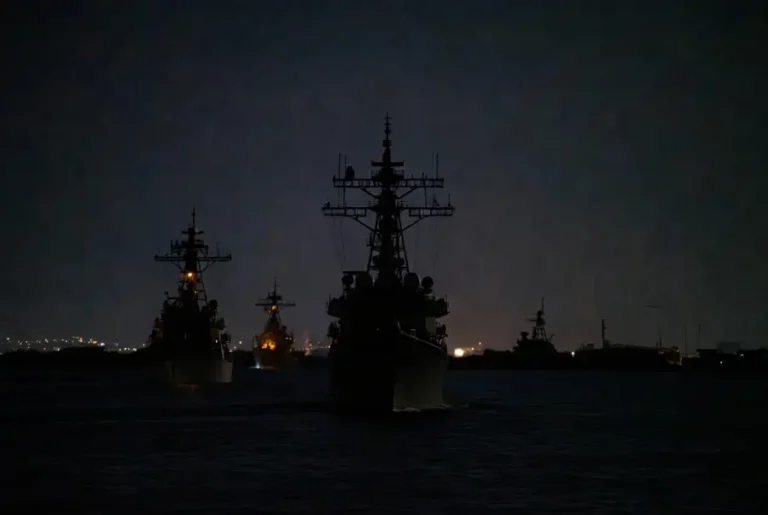
Asset positioning includes naval vessels and air support nearer to Venezuelan waters, enhancing rapid response capabilities without direct border crossings. The strategy mirrors past operations like those in the Caribbean during Cold War contingencies.
MEDIA REPORTING
See how news sources on all sides are covering this story.
Left 31% | Right 40% | Center 23% | Unrated 6%
The Context
Maduro’s government, rooted in the Bolivarian Revolution initiated by Hugo Chávez in 1999, has faced hyperinflation and shortages prompting mass migrations exceeding seven million people. Opposition figures like Juan Guaidó received U.S. backing as interim president until 2023 transitions.
International bodies such as the Organization of American States have invoked the Inter-American Democratic Charter against erosions of electoral integrity. Humanitarian corridors facilitate aid delivery to underserved populations amid blockades.
Backers of firm stances argue they safeguard democratic norms and curb narcotics trafficking routes through Venezuelan territory. Opponents fear interventions could exacerbate refugee flows and regional instability without clear exit strategies.
The Monroe Doctrine’s legacy informs U.S. hemispheric policies, though modern applications emphasize multilateralism via forums like the Lima Group. Defense pacts with Colombia provide staging options for joint exercises.
Venezuelan oil reserves, the world’s largest, underpin economic leverage, with U.S. firms historically involved before nationalizations in the 2000s. Current dynamics involve license revocations to target regime funding sources.
Trump’s approach prioritizes executive actions, including asset freezes on officials implicated in corruption probes. Congressional oversight through committees like Foreign Affairs shapes funding for related initiatives.
Spread Awareness Snippets
BREAKING: US Military Buildup in Venezuela Region Signals Imminent Strikes Against Maduro’s Regime Grip
JUST IN: US Military Buildup in Venezuela Region Signals Imminent Strikes Against Maduro’s Regime Grip
NEW: US Military Buildup in Venezuela Region Signals Imminent Strikes Against Maduro’s Regime Grip
Coverage Details
| Total News Sources | 35 |
| Left | 11 |
| Right | 14 |
| Center | 8 |
| Unrated | 2 |
| Bias Distribution | 40% Right |
Relevancy
Last Updated