Follow TNGB
Venezuela Minister Reveals Heavy Toll on Maduro’s Team from US Strike

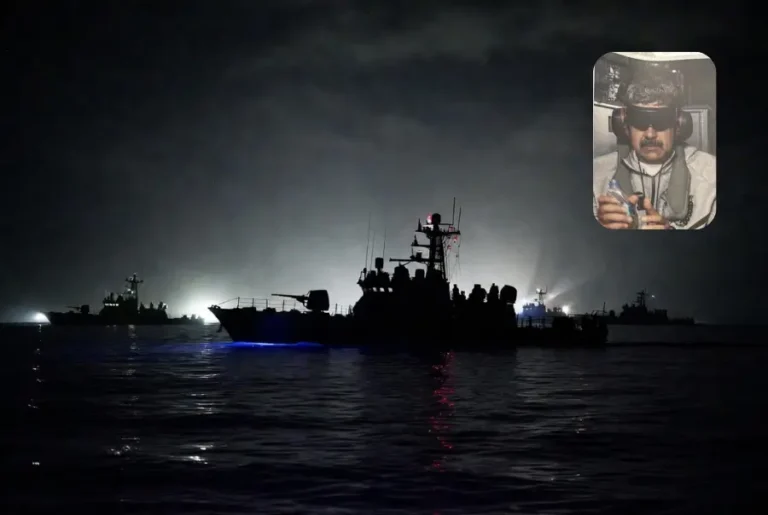
VENEZUELA, Jan 4 (TNGB) – Venezuelan Defense Minister Vladimir Padrino Lopez delivered a stark accusation on national television, asserting that American forces had eliminated a substantial portion of Nicolas Maduro’s protective detail during the operation that resulted in the former president’s detention. This declaration came amid escalating tensions following the unexpected U.S. military intervention in Caracas. Padrino, addressing the nation from an undisclosed location, described the events as a blatant violation of sovereignty, emphasizing the human cost of the raid.
The operation, which unfolded in the early hours of January 3, targeted Fort Tiuna, a key military installation housing the Ministry of Defense. According to accounts from Venezuelan officials, U.S. special forces, supported by aerial strikes, breached the compound where Maduro and his wife, Cilia Flores, were residing. A senior Venezuelan source, speaking anonymously, reported that over 40 individuals, including both military personnel and civilians, lost their lives in the assault. This figure, however, remains unverified by independent observers, as access to the site has been restricted.
U.S. President Donald Trump, in statements following the capture, acknowledged resistance encountered by American troops but maintained that no U.S. personnel were fatally injured. He described the mission as a success in apprehending Maduro, who faces federal charges in New York related to narcotics and arms trafficking. Trump further indicated that the United States intends to exert influence over Venezuela’s governance in the wake of the leader’s removal, a position that has drawn international scrutiny.
In response, Venezuela’s interim leadership, now under Vice President Delcy Rodriguez, has rallied around the narrative of defiance. Rodriguez, sworn in as acting president by the Supreme Court, affirmed that Maduro remains the legitimate head of state despite his extradition. She condemned the U.S. actions as an invasion under false pretenses, vowing to maintain governmental operations and military readiness. This stance aligns with long-standing Venezuelan rhetoric emphasizing national independence.
International reactions have been mixed, with the European Union calling for adherence to international law and respect for Venezuelan self-determination. Notably, all EU members except Hungary endorsed a statement urging a peaceful resolution. Meanwhile, allies of Maduro, such as Russia and China, have reportedly voiced strong opposition to the U.S. intervention, viewing it as a precedent for unilateral actions in Latin America.
The raid’s planning reportedly involved extensive intelligence gathering, including surveillance of Maduro’s daily routines and the construction of a replica of his safe house for training purposes. U.S. officials detailed the involvement of over 150 aircraft to neutralize air defenses, allowing helicopters to deploy ground teams. The entire operation lasted approximately two hours, culminating in Maduro’s surrender after failing to reach a secure area within the compound.
Casualty reports from Venezuelan sources paint a picture of chaos, with strikes allegedly hitting civilian areas near the military base. Padrino specifically accused U.S. forces of cold-blooded executions, a charge that contrasts with American descriptions of targeted engagements. Independent verification is challenging due to the ongoing instability in Caracas, where protests and celebrations have erupted in equal measure.
Maduro’s arrival in New York marks a significant escalation in U.S.-Venezuela relations, reminiscent of the 1989 Panama invasion. He is slated to appear in federal court on drug-related indictments that date back several years. Legal experts suggest the case could hinge on evidence of Maduro’s alleged ties to narco-trafficking networks, though his defense may argue political motivation behind the charges.
Within Venezuela, the power vacuum has prompted speculation about the loyalty of the armed forces. Padrino, a key figure in the military hierarchy, has pledged to ensure governability and internal order. However, whispers of defections among lower ranks suggest potential fractures in the chain of command, especially as economic pressures from sanctions continue to mount.
Opposition figures, both in Venezuela and abroad, have expressed cautious optimism. In Madrid, Venezuelan exiles gathered to monitor developments, viewing Maduro’s capture as a potential turning point. Yet, concerns linger over the interim government’s composition, which includes many of Maduro’s allies, potentially hindering a smooth transition to democratic elections.
The U.S. administration, through Secretary of State Marco Rubio, has clarified that America is not at war with Venezuela but seeks to promote stability and resource access. Rubio emphasized achieving top priorities without prolonged military engagement, though critics argue this overlooks the humanitarian implications of the raid.
As investigations into the operation proceed, questions about civilian casualties and the legality of extraterritorial arrests persist. Human rights organizations have called for transparent inquiries, urging both sides to provide access to affected areas. The incident underscores the fragile balance of power in the region, with long-term consequences yet to unfold.
Media reporting for this story: 28% Left | 22% Right | 40% Center | 10% Unrated
FYI, I add facts to stories that often miss them. Join our Substack for ad-free updates on Maduro’s capture or become a reporter and report any Maduro’s capture developments yourself.