
Follow TNGB
Trump Threatens Insurrection Act for Los Angeles Protests

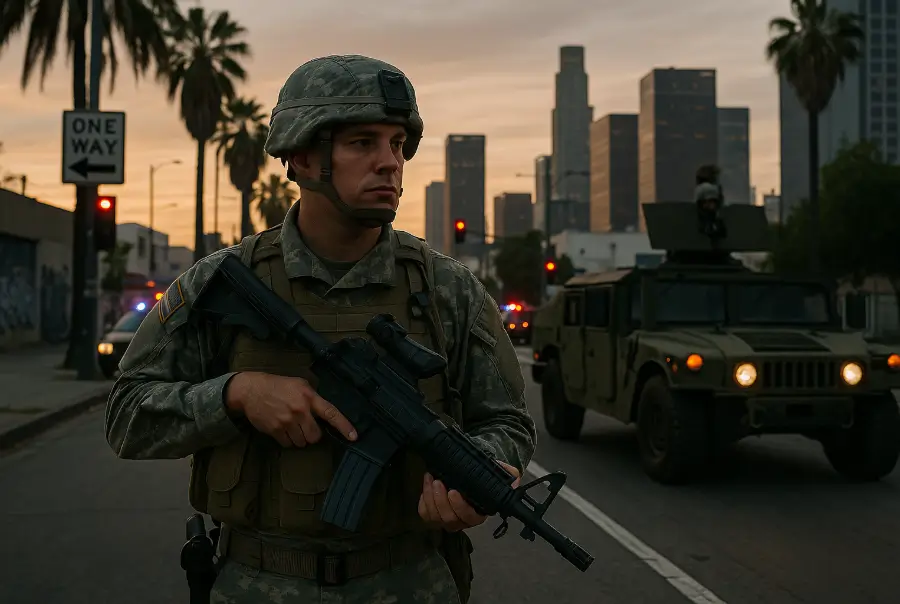
President Donald Trump has warned he may invoke the Insurrection Act to address ongoing protests in Los Angeles, sparked by aggressive immigration enforcement operations. Speaking from the Oval Office, he stated that if the situation escalates to what he deems an insurrection, he will deploy federal troops to restore order.
The protests, now in their third day, erupted after Immigration and Customs Enforcement (ICE) raids targeting illegal immigrants across the city. Demonstrators, some waving foreign flags, have clashed with local police and National Guard units, with reports of arson and vandalism in downtown areas.
Trump has already deployed 4,000 National Guard troops and 700 Marines to Los Angeles, a move that has drawn sharp criticism from California officials. Governor Gavin Newsom called the deployment “unlawful” and vowed to sue, arguing it violates state sovereignty and inflames tensions.
The Insurrection Act of 1807 allows a president to use military forces domestically to quell civil disorder or rebellion. The last invocation was in 1992, when President George H.W. Bush used it to address Los Angeles riots following the Rodney King verdict, but only at the request of state authorities.
Unlike the 1992 deployment, Trump’s actions bypass California’s governor, a rare and controversial step. Legal experts warn that invoking the Insurrection Act could expand federal authority, allowing troops to perform law enforcement duties typically reserved for local police.
Trump defended his stance, claiming parts of Los Angeles were on the verge of chaos, with “paid insurrectionists” attacking federal agents. He insisted the city would be “burning” without his intervention, though local officials dispute the severity of the unrest.
Los Angeles Mayor Karen Bass condemned the violence but criticized the federal response, urging peaceful protests and de-escalation. She argued that the presence of troops has worsened the situation, a view echoed by Democratic leaders calling for restraint.
White House adviser Stephen Miller has labeled the protests an “insurrection,” raising fears among critics that the administration is laying the groundwork for broader military action. Some congressional Democrats, including Senator Richard Blumenthal, worry Trump may use the unrest as a pretext for imposing martial law.
Reports of protests spreading to other cities, including San Francisco and Houston, have heightened national tensions. In New York, two dozen demonstrators were arrested after storming Trump Tower in solidarity with Los Angeles protesters.
California Republicans have introduced a resolution condemning the violence and supporting federal intervention, arguing that local leaders have failed to control the situation. They point to burned American flags and attacks on law enforcement as evidence of lawlessness.
Trump’s border czar, Tom Homan, defended the troop deployment, stating it depends on protester actions. However, legal challenges are mounting, with California’s lawsuit alleging the administration’s actions violate the 10th Amendment.
As Los Angeles braces for more demonstrations, the nation watches closely, with debates intensifying over federal power, immigration policy, and the balance between order and civil liberties. Trump’s next moves could reshape the role of the military in domestic affairs.