
Follow TNGB
Los Angeles Protests Labeled Insurrection by Georgia Congressman

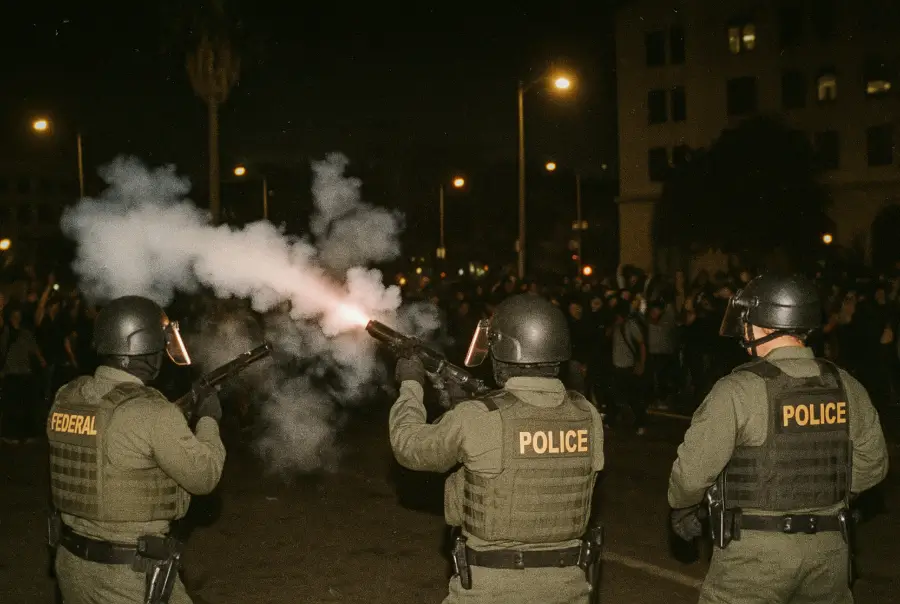
In Los Angeles, protests against Immigration and Customs Enforcement (ICE) operations have escalated into violent clashes, prompting a Georgia congressman to call them an “insurrection.” Representative Mike Collins, a Republican, has stirred controversy by labeling mass deportations a “moderate” policy in response to the unrest.
The protests began Friday after ICE agents arrested at least 44 individuals for immigration violations, targeting locations like Home Depot stores and warehouses. Demonstrators, numbering around 1,000, reportedly surrounded a federal building, assaulted ICE officers, slashed tires, and defaced property, according to the Department of Homeland Security.
Collins, known for his hardline stance on immigration, posted on X that the protests constitute treason in defense of a “foreign invasion.” His remarks align with the Trump administration’s aggressive immigration enforcement, which aims to deport millions of illegal immigrants.
The White House has backed Collins’ rhetoric, with Senior Adviser Stephen Miller also calling the protests an “insurrection” against U.S. sovereignty. President Trump deployed the National Guard to Los Angeles under federal authority, though he stopped short of invoking the Insurrection Act.
Clashes intensified Saturday, with police firing flash-bangs and irritants at protesters blocking streets in the Paramount area. Los Angeles Police Chief Jim McDonnell clarified that local law enforcement is not assisting ICE but maintains a presence for public safety.
Critics argue Collins’ language inflames tensions and mischaracterizes the protests, which include demands to protect migrants with legal residency. Some deportations have reportedly ensnared lawful residents, prompting legal challenges and judicial orders to halt certain removals.
California Governor Gavin Newsom called the National Guard deployment “unnecessary” and “deranged,” reflecting state-level resistance to federal immigration policies. Los Angeles city officials have vowed not to cooperate with ICE, citing sanctuary city laws.
The unrest has raised fears of similar protests in cities like Chicago or New York, with Trump warning that troops could be deployed nationwide if needed. He emphasized a “law and order” approach, stating, “We’re not going to let this country be torn apart.”
Collins’ comments have drawn sharp criticism for equating peaceful assembly with treason, a charge some say undermines First Amendment rights. Civil rights groups argue the protests stem from genuine concerns over due process and family separations caused by deportations.
The Trump administration’s goal of arresting 3,000 migrants daily has fueled the backlash, with estimates suggesting over 2 million illegal immigrants live in California. Missteps, like the wrongful deportation of a Maryland father, have further eroded public trust in ICE operations.
As Los Angeles braces for a third day of protests, the debate over immigration enforcement grows increasingly polarized. Collins’ provocative rhetoric underscores the deep divide between federal policy and local resistance, with no resolution in sight.