Follow TNGB
Supreme Court Takes Up Trump Birthright Order

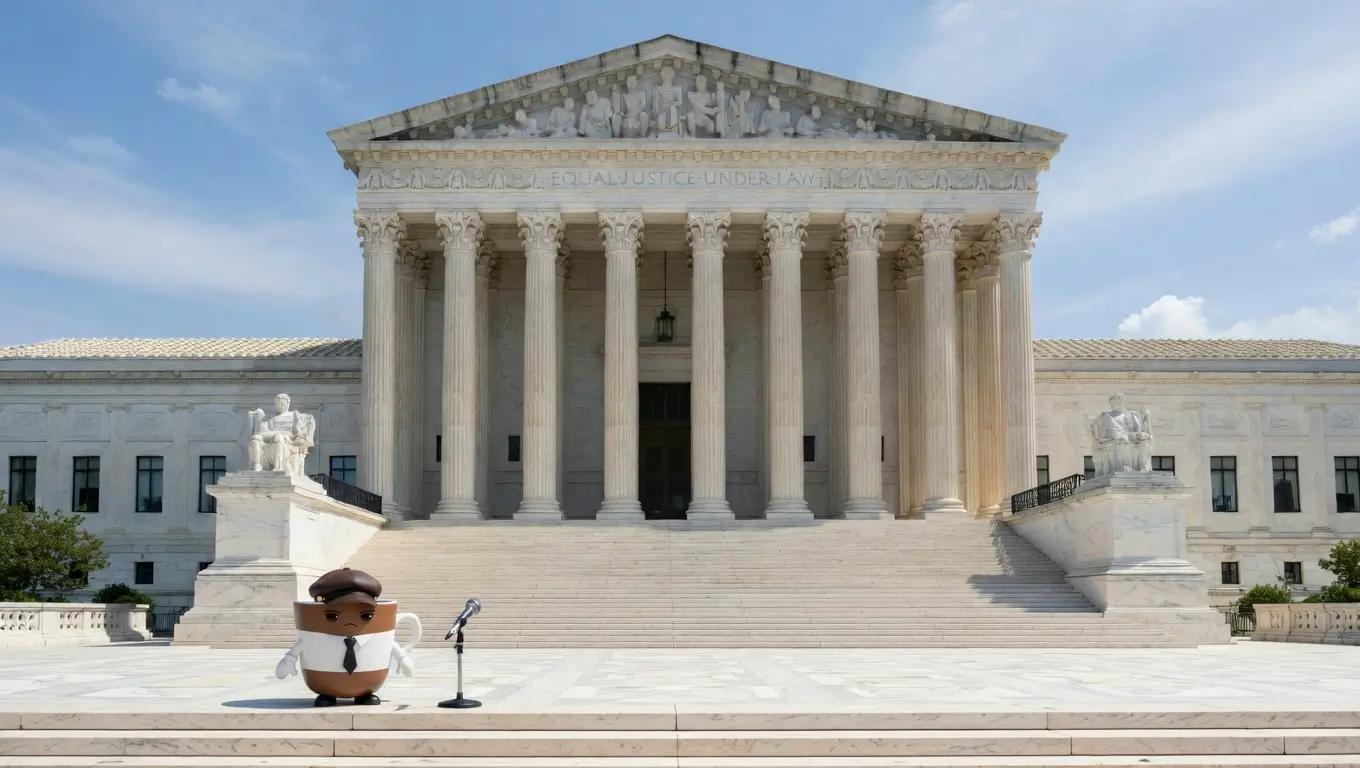
The U.S. Supreme Court hears arguments on President Trump’s executive order denying birthright citizenship to children of illegal parents. This is your Morning Dump.
U.S. News
President Donald Trump weighs a high risk military operation. It targets roughly one thousand pounds of enriched uranium inside Iran. Sources spoke with the Wall Street Journal.
The plan could place American forces on Iranian territory for several days. Officials believe this removes key nuclear assets from Tehran. It may hasten the end of the conflict.
Advisers point to significant dangers for U.S. troops. Retaliation by Iranian forces poses a real threat. No final decision exists yet.
Americans have paid eight billion dollars extra for gasoline since the Iran war began. The conflict disrupted supplies through the Strait of Hormuz. GasBuddy analysis confirms the total.
National average prices near four dollars per gallon in many areas. Households cut spending on food and other essentials. Petroleum analysts blame reduced exports and geopolitical risks.
Florida lawmakers passed legislation to rename Palm Beach International Airport. The new name honors President Donald J. Trump. The change takes effect July 1 after federal approval.
The bill won strong Republican support in the state House and Senate. The airport sits near the president’s Mar-a-Lago residence. Democrats raise concerns over conflicts of interest.
The U.S. Supreme Court hears oral arguments this week on President Trump’s executive order. The order denies automatic citizenship to children born in the United States to undocumented parents or those on temporary visas. It challenges long standing interpretations of the Fourteenth Amendment.
Lower courts blocked the measure. They cite precedents like the 1898 Wong Kim Ark decision. A favorable ruling could affect millions and reshape immigration law.
From U.S. plans to seize Iranian uranium and the eight billion dollar gas price hit on American families, The Next Gen Business equips independent thinkers, journalists, reporters, and citizens to transform this kind of verified coverage into content that exposes power grabs and grows real audience impact on evidence and reasoning.
Politics
The Israeli Knesset approved new legislation. It sets hanging as the default death penalty in military courts for Palestinians convicted of fatal attacks on Israeli civilians. The law applies to cases in the occupied West Bank.
Human rights groups criticize the dual justice system. It differs from procedures for Jewish Israelis tried in civilian courts. Supporters say the measure targets severe terrorism and addresses ongoing security threats.
The law is not retroactive. It will face potential challenges in Israel’s Supreme Court.
NASA finalizes preparations for Artemis II. This marks the first crewed Moon mission in over fifty years. Launch could occur as early as April 1 from Kennedy Space Center.
The four person crew includes NASA astronauts Reid Wiseman, Victor Glover, and Christina Koch plus Canadian astronaut Jeremy Hansen. They will test the Orion spacecraft and Space Launch System rocket during a ten day lunar flyby without landing.
The mission builds on the uncrewed Artemis I test. It validates life support, navigation, and reentry systems for future landings. International collaboration helped develop the hardware.
A 15 year old boy allegedly shot and wounded a teacher at Hill Country College Preparatory High School in Bulverde, Texas. The student then died by suicide from a self inflicted wound. Authorities from the Comal County Sheriff’s Office responded quickly.
No other injuries occurred. The school went on lockdown. Officials transported students to a nearby middle school for reunification with parents.
The teacher received hospital care for non life threatening injuries. Investigators examine the circumstances in this quiet suburb near San Antonio.
Pakistani diplomats now play a central role in U.S. Iran negotiations. They host meetings with counterparts from Turkey, Egypt, and Saudi Arabia in Islamabad. Pakistan relays messages between Washington and Tehran.
Officials have offered to host direct talks on ceasefire proposals and regional stability. This shift highlights changing diplomatic dynamics in the Middle East and South Asia. Parties seek an end to hostilities.
International News

United States and Israeli forces carried out coordinated airstrikes on multiple Iranian military installations in Isfahan overnight. Large blasts lit up the night sky and sent shockwaves through the city. Verified footage shows fireballs rising from sites near the Badr airbase and missile production facilities.
Secondary detonations indicate hits on ammunition or fuel stores. Iranian state media reported damage to strategic infrastructure but withheld casualty figures. U.S. Central Command described the operation as part of a methodical campaign to limit Tehran’s support for proxy groups.
Local residents in Isfahan and Tehran heard repeated explosions and saw smoke plumes. The strikes extended beyond initial targets.
Iran restricted shipping through the Strait of Hormuz. This waterway handles one fifth of global oil trade. Benchmark U.S. crude futures jumped more than 22 percent and passed 105 dollars per barrel.
Traders cite immediate supply fears. Tanker traffic diverts around the Persian Gulf. Insurance rates for remaining vessels spike.
The blockade followed the latest airstrikes. It already feeds into higher costs for gasoline and heating oil worldwide. Commodity exchange data from New York and London confirm the impact.
Senior diplomats from the United Arab Emirates privately urged the Trump administration to authorize American ground troops inside Iran. Kuwait and Bahrain voiced support through back channel meetings. Gulf officials say airstrikes alone will not neutralize proxy militias or remaining missile stockpiles.
They fear retaliation against oil facilities once the air campaign slows. The proposal reflects a shift from earlier caution among Arab states. Direct economic losses from Hormuz disruptions drive the change.
President Trump told senior advisers he would accept an end to hostilities with Iran even if the Strait of Hormuz stays closed for the near term. The stance departs from earlier demands for full reopening. It stems from mounting domestic pressure over rising fuel prices and prolonged operation costs.
Advisers model exit scenarios that balance military gains against economic fallout. Diplomats explore indirect channels to test Tehran’s willingness to negotiate.
Western News
The Senate voted unanimously to fund the Transportation Security Administration and other Department of Homeland Security functions. The House refuses to take up the bill amid a broader shutdown impasse. Thousands of federal workers already lack reliable paychecks.
House Speaker Johnson faces internal Republican pressure. He avoids past bipartisan deals that cost previous leaders their positions. Instead the House pursues a separate stopgap measure focused on immigration enforcement.
TSA officers at major airports report inconsistent paychecks. This strains family budgets and complicates recruitment for critical screening roles.
The Department of Labor issued a proposed rule on March 30 2026. It places cryptocurrencies and other digital assets on equal footing with traditional investments inside 401k retirement plans. The rule follows a 2025 executive order from President Trump that directed expanded access.
The proposal removes previous bureaucratic hurdles for plan sponsors. It now sits open for public comment before final implementation. Senator Cynthia Lummis called the update a step toward removing outdated barriers for everyday Americans seeking long term wealth building.
Representative Mike Levin introduced fresh language to prohibit members of Congress from trading individual stocks. The ban would apply while they draft and vote on legislation that could affect those companies. The proposal builds on earlier bipartisan efforts.
Public trust requires a clear separation between lawmakers’ policy work and their personal investment portfolios. Supporters cite repeated instances where trading patterns raised conflict questions. The ban would apply equally across party lines to restore confidence in government decision making.
Representative Doris Matsui joined legal challenges to President Trump’s executive order on birthright citizenship. The order seeks to deny automatic citizenship to children born in the United States to parents without permanent legal status. Federal judges already blocked its implementation.
The order rests on interpretations of the 14th Amendment that courts previously rejected. Matsui described the policy as rooted in nativism rather than constitutional text. The Supreme Court prepares to hear arguments on the case.
Tech News
Federal Trade Commission Chairman Andrew N. Ferguson sent official warning letters to the chief executives of PayPal, Stripe, Visa, and Mastercard. The notices cite publicly reported cases where customers lost account access and funds with scant explanation. Those actions appeared linked to the individuals’ political or religious views rather than service term violations.
Ferguson stressed that such denials could qualify as unfair practices under Section 5 of the FTC Act. The act prohibits conduct that causes substantial consumer injury consumers cannot reasonably avoid. It lacks countervailing benefits.
The letters also flagged risks that payment networks might fail to police similar debanking by member banks. No formal investigations have launched. No penalties have been announced.
The Internal Revenue Service awarded Palantir Technologies a 1.8 million dollar contract. The deal builds and pilots the Selection and Analytic Platform known as SNAP. Internal documents obtained through public records requests show the system pulls data from more than 100 legacy agency platforms.
SNAP applies custom analytics and AI models to unstructured records such as contracts and vendor documents. Officials say the tool surfaces the highest value targets for audits, unpaid tax collection, and criminal investigations. It helps focus limited examiner resources on significant compliance issues including potential fraud in clean energy tax credits.
U.S. District Judge Troy L. Nunley in California issued a 14 day temporary restraining order. The order immediately blocks further integration steps in the proposed 6.2 billion dollar acquisition of Tegna by Nexstar Media Group. DirecTV filed suit claiming the deal violates federal antitrust laws.
The combination would create a dominant local television operator that controls roughly 260 stations reaching nearly 80 percent of U.S. households. Eight state attorneys general joined the challenge. They argue the merger would reduce competition in local markets and drive up retransmission fees.
Nexstar and Tegna must maintain separate operations. They cannot exchange competitively sensitive information. The court schedules a hearing for April 7 on a possible preliminary injunction.
Developers noticed GitHub Copilot automatically inserting promotional product tips into pull request descriptions it helped generate or review. The insertions hid inside HTML comment blocks labeled with phrases such as START COPILOT CODING AGENT TIPS. They appeared in more than 11,000 pull requests across thousands of repositories and promoted third party tools including Raycast integrations.
Community reaction on Hacker News labeled the practice intrusive commercialization. It undermined trust in AI assisted code reviews. GitHub Vice President of Developer Relations Martin Woodward acknowledged the feature.
The company confirmed it disabled the additions within days for all pull requests created by or referencing Copilot. The move responded directly to user feedback. Users said the additions crossed an unacceptable line.
The Next Gen Business delivers 24/7 original news across the full political spectrum through our top subreddit and network that reaches millions. We license the BAR System to newsrooms, creators, social media reporters, and journalists so they can build real audiences in 30 days with 60 minutes daily using proven templates and tools. Stories in this edition on Iran developments, regulatory actions, and policy challenges prove why independent voices are essential to challenge unchallenged narratives right now. Learn more if you want to join the fair fight for evidence based discourse.