
Follow TNGB
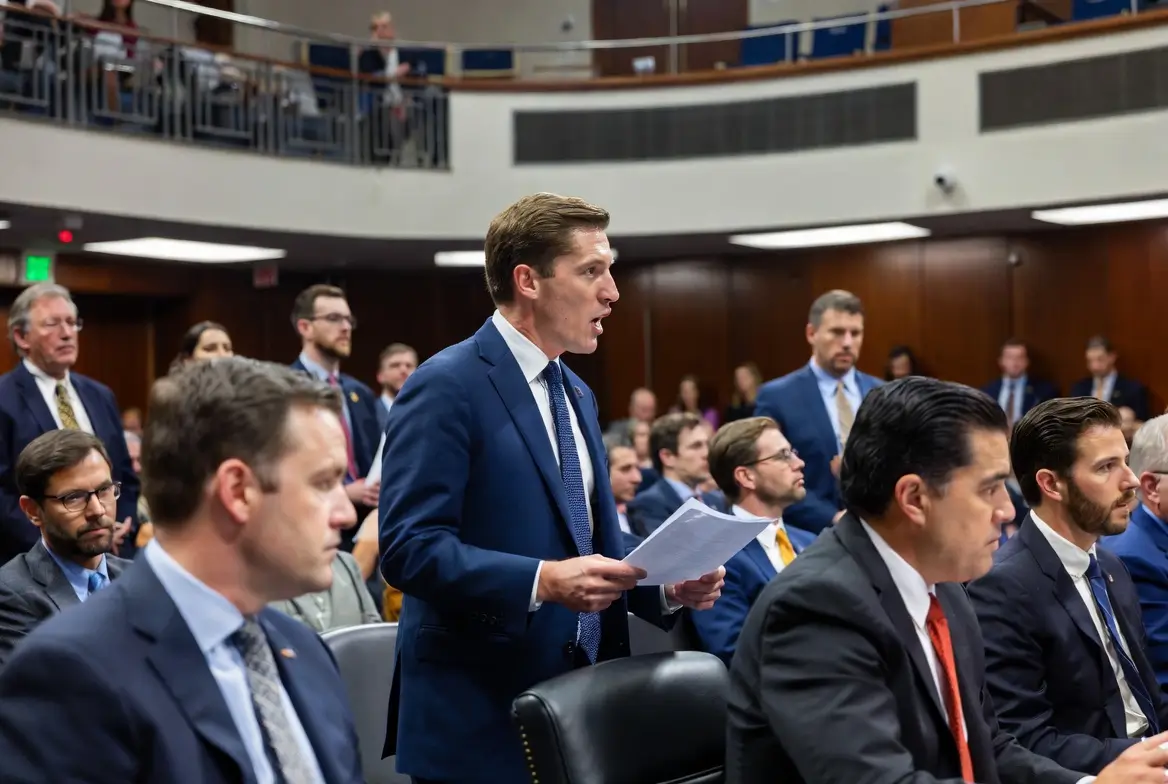
Jack Smith Faces Intense Scrutiny in Contentious Congressional Grilling

Former Special Counsel Jack Smith entered the House Judiciary Committee room on January 22, 2026, ready to defend his investigations into President Donald Trump amid a backdrop of partisan tensions that have simmered since the 2020 election. Reportedly, Smith’s appearance marked his first public testimony on the matter, following a closed-door deposition in December 2025. The hearing, chaired by Republican Representative Jim Jordan, promised oversight but quickly devolved into pointed accusations from GOP members who alleged political bias in Smith’s probes.
Smith, in his opening statement, asserted that his team had developed proof beyond a reasonable doubt that Trump engaged in criminal activity related to the mishandling of classified documents and efforts to overturn the 2020 election results. He emphasized that no one should be above the law, reportedly stating that the rule of law depends on collective commitment and dedicated public service. Democrats on the committee, including Representative Jamie Raskin, praised Smith’s integrity, while Republicans pressed him on alleged coordination with the Biden administration.
The atmosphere grew charged as lawmakers traded barbs, with Smith maintaining composure despite repeated claims that his office was weaponized for political purposes. Allegedly, Smith expressed concern that Americans might take the rule of law for granted, drawing from his international experience where he witnessed its erosion. The testimony highlighted ongoing divisions in Washington, with Smith reportedly standing firm on his decisions to bring charges, even as those cases were dismissed following Trump’s 2024 reelection.
The Investigations Under the Microscope
Republicans grilled Smith on the details of the Mar-a-Lago classified documents case, questioning the raid’s necessity and evidence handling. Smith reportedly defended the actions as lawful and essential, pointing to evidence that Trump willfully retained sensitive materials. He dismissed notions of retribution, allegedly blasting any potential misuse of the Justice Department in a second Trump term.
In the January 6 probe, Smith outlined how his team uncovered attempts to subvert the electoral process, including fake electors and pressure on officials. Reportedly, he reiterated that the evidence supported charges of conspiracy and obstruction, though the cases never went to trial due to political developments. Democrats highlighted Smith’s track record at The Hague, arguing it demonstrated his impartiality.
The hearing also touched on broader implications for democracy, with Smith allegedly warning that pardons for January 6 rioters do not enhance national safety. GOP members countered by accusing Smith of selective prosecution, comparing his cases to those involving other political figures. Despite the back-and-forth, Smith reportedly expressed no regrets, underscoring his commitment to justice over politics.
A Dramatic Interruption Shakes the Proceedings
During a midday recess, the hearing room erupted in chaos when former D.C. Metropolitan Police Officer Michael Fanone confronted far-right operative Ivan Raiklin, a known 2020 election conspiracy theorist. Fanone, who defended the Capitol on January 6, reportedly shouted expletives at Raiklin, calling him a traitor to the country. The altercation nearly turned physical, requiring intervention from Fanone’s former colleagues and U.S. Capitol Police.
Raiklin, who has styled himself as a “Secretary of Retribution,” was attending as an audience member, a frequent presence at such events. Reportedly, the confrontation stemmed from deep-seated animosities tied to January 6, with Fanone restraining himself only after being pulled back. Capitol Police escorted Fanone out briefly, but he returned to applause from Democrats, highlighting the raw emotions still lingering from the Capitol attack.
This incident underscored the hearing’s volatility, transforming a procedural oversight session into a microcosm of national divisions. Allegedly, Raiklin’s presence was intentional, aimed at provoking reactions, as he has a history of disrupting similar proceedings. The episode drew immediate media attention, overshadowing parts of Smith’s testimony and illustrating how past traumas continue to influence current political discourse.
Broader Implications for Justice and Politics
Smith’s testimony comes at a time when trust in federal institutions remains fragile, with polls showing partisan splits on the legitimacy of investigations into Trump. Reportedly, he used the platform to reaffirm that his work was guided by facts and law, not external pressures. Critics argue that the hearing itself was a Republican-led effort to discredit ongoing accountability efforts related to the 2020 election.
Democrats, in turn, used questioning to elicit details that could inform future legislative reforms, such as strengthening protections against election interference. Smith allegedly avoided speculating on hypothetical scenarios, focusing instead on the evidence his team compiled. The session ended without new revelations but reinforced existing battle lines in Congress.
Looking ahead, the hearing may influence discussions on special counsel regulations and executive accountability. Reportedly, Smith expressed hope that his investigations, though unresolved in court, serve as a historical record of the events. As Washington grapples with these issues, the event serves as a reminder of the challenges in maintaining impartial justice amid polarized politics.
Media reporting for this story: 28% Left | 32% Right | 35% Center | 5% Unrated
FYI, I add facts to stories that often miss them. Join our Substack for ad-free updates on the jack smith Heated House Testimony or become a reporter and report any the jack smith Heated House Testimony developments yourself.


