Follow TNGB
Hidden Headlines Daily Recap – November 24, 2025

Military Probes Allegations of Misconduct Against Retired Navy Captain Senator Mark Kelly
The Department of War announced it received serious claims of wrongdoing against Captain Mark Kelly, a retired U.S. Navy officer and current Arizona senator. Officials stated a full review under military law now underway, potentially leading to his recall for court-martial or other steps.
This development comes amid heated national debates over service members duty to follow orders. Kelly, known for his combat pilot background, recently joined fellow veterans in Congress to remind troops they must reject unlawful directives.
Mark Kelly rose to prominence as a Navy captain and astronaut, logging over 50 days in space across multiple missions. Elected to the Senate in 2020, he has championed veterans issues and border security while navigating tense partisan divides.
His military service included piloting combat aircraft during the Gulf War, earning distinctions for precision strikes. Today, as a lawmaker, Kelly often draws on that experience to address defense policy and national security challenges.
Retirees like Kelly remain bound by the Uniform Code of Military Justice for relevant offenses, a standard that applies broadly to maintain discipline. Federal statutes also bar efforts to undermine troop morale or loyalty, with violations pursued through legal means.
Service members must obey presumed lawful orders, as personal views cannot override such commands under established rules. While these principles hold firm, the specific allegations against Kelly tie directly to recent public statements on order compliance, which it is true sparked backlash but align with long-standing military ethics on unlawful directives.
Speaker Mike Johnson Attributes Record-Low Thanksgiving Gas Prices to GOP Energy Revival
House Speaker Mike Johnson declared that the sharp drop in fuel costs for the holiday stems from Republican efforts to boost domestic oil output.
He highlighted how lawmakers reversed prior restrictions on drilling, allowing more rigs to operate across key states like Texas and North Dakota.
This approach, Johnson argued, prioritizes jobs for energy workers while curbing what he called aggressive federal hurdles on production.
American families now face pump prices around $3.02 per gallon on average, easing budgets as millions drive to gatherings.
Such levels mark the cheapest since the early pandemic years, when demand cratered and refineries idled.
Back then, a barrel of crude hovered near $40, half today’s rate, but supply gluts kept stations affordable for cautious travelers.
Over the past year, U.S. output climbed by over 500,000 barrels daily, hitting records that flood pipelines from the Permian Basin.
Congressional votes in early 2025 streamlined permits for new wells, drawing praise from industry groups for faster project approvals.
These shifts followed a heated debate on balancing exports with home needs, where proponents stressed energy security amid global tensions.
It is true that Thanksgiving gas prices sit at roughly $3.02 per gallon nationwide, the lowest since 2020’s pandemic slump when averages dipped below $2.20.
Johnson’s claim that Republicans alone restored dominance holds partial weight, as domestic production did surge under relaxed rules, yet experts point to OPEC’s output hikes and softer demand as bigger drivers of the crude price slide from $80 to under $60 per barrel.
While Biden-era policies faced criticism for pausing leases, data shows drilling permits actually rose during that time, complicating the narrative of a total reversal.
Trump Praises Productive Call with Xi, Boosting U.S. Farmers Through New China Deal
President Donald Trump described a recent phone conversation with Chinese leader Xi Jinping as highly successful. The discussion covered critical areas like the Ukraine conflict, f–tanyl flows and agricultural exports.
Trump highlighted a fresh agreement that supports American growers with better access to Chinese markets. This comes amid ongoing efforts to ease trade barriers that have hurt rural economies for years.
Such dialogues mark a shift from earlier frictions between the two largest global powers. Past tariff battles drained billions from U.S. exports, especially soybeans that Midwest farmers rely on heavily.
Those disputes forced many operations to cut jobs or pivot to less profitable buyers. Now, renewed commitments aim to stabilize prices and restore confidence in overseas sales.
It is true that the leaders addressed f–tanyl smuggling, a top concern with thousands of overdose deaths linked to Chinese precursors each year. Their talk also touched on Russia and Ukraine, where Beijing’s neutral stance has drawn U.S. pressure for more decisive action.
Reports confirm progress on farm product deals, including soybean purchases that match pre-trade war levels. The invitation for Trump to visit Beijing next spring aligns with official announcements, though details on the reciprocal U.S. trip remain pending.
The South Korea summit three weeks prior laid groundwork for these steps, with both sides verifying compliance on prior pacts. Frequent leader-level talks, as pledged, could help navigate rising tensions over technology and security.
Federal Judge Clears Comey and James of Indictments Over Flawed Prosecutor Selection
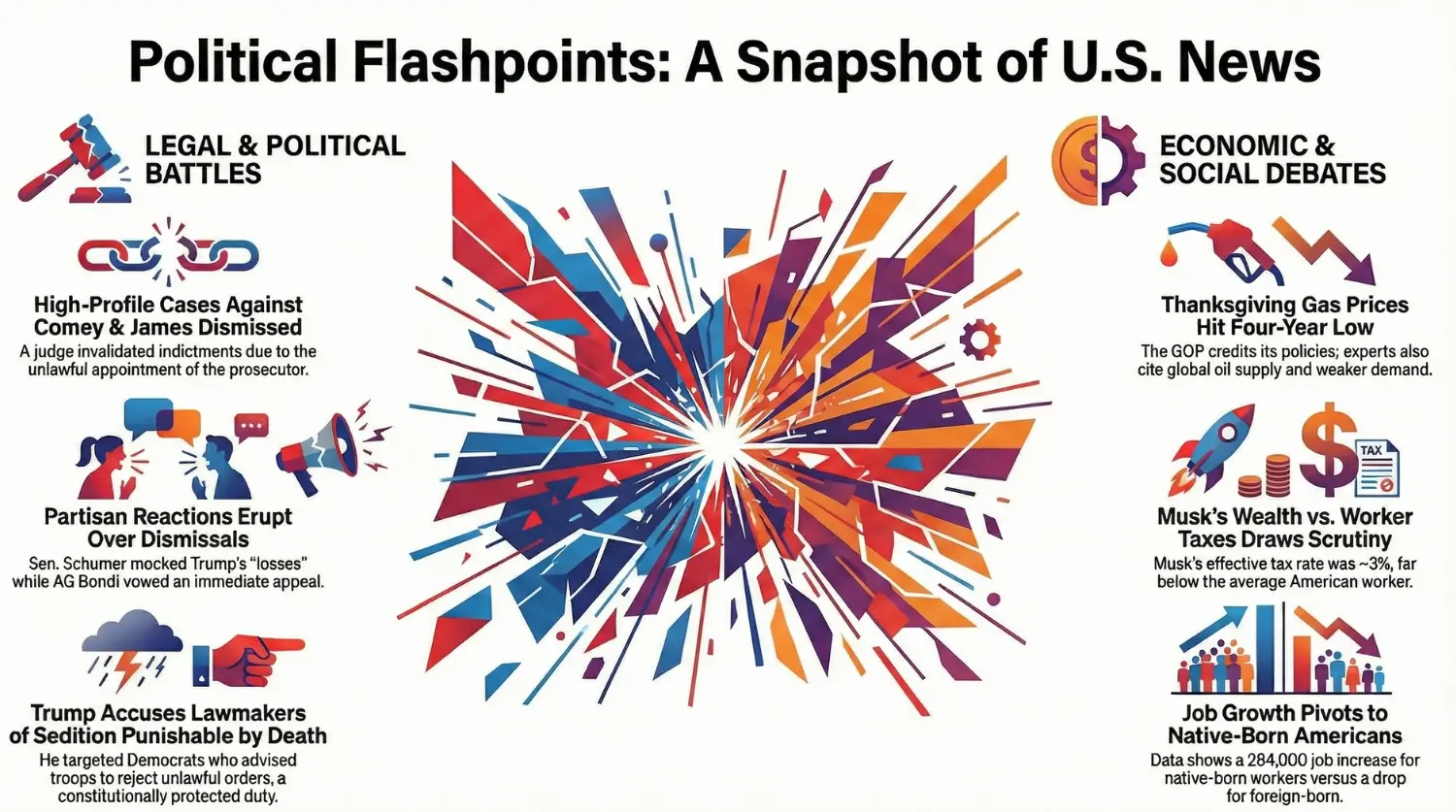
A Virginia federal judge reportedly dismissed indictments against former FBI Director James Comey and New York Attorney General Letitia James on November 24. The rulings centered on the unlawful appointment of the lead prosecutor in both matters.
Comey faces no further charges related to alleged lies to Congress or obstruction from past election inquiries. James similarly escapes mortgage fraud accusations tied to her office without additional proceedings.
These developments cap years of legal battles sparked by aggressive probes into political figures. The cases emerged from a prior administration’s push to target officials seen as opponents through targeted investigations.
Prosecutorial appointments like this one often fall under strict federal rules to ensure impartiality. Violations can halt entire cases, prompting courts to prioritize procedural integrity over substantive claims.
It is true that the judge ruled the prosecutor’s appointment invalid under federal statutes, leading to outright dismissals of both Comey and James indictments on November 24, 2025. No appeals or refilings have surfaced yet in either instance.
Congressman Greg Casar blasts Elon Musk’s trillionaire sprint as a raw deal for everyday workers crushed by unfair taxes.
The Texas Democrat took direct aim at the Tesla chief, reportedly highlighting how Musk’s fortune balloons while his effective tax burden stays lighter than the folks assembling his electric vehicles.
Casar painted a stark picture of billionaires thriving under policies that reportedly let them keep more while families scrape by on stagnant wages.
This comes amid Musk’s recent windfall from a shareholder vote that could swell his holdings by another massive chunk if Tesla hits key milestones.
Such projections trace back to Musk’s dominance in electric cars and space travel, where his companies have snagged billions in contracts and credits over the years.
Those boosts help explain why analysts now peg Musk to cross the trillion-dollar mark ahead of any other mogul, a feat tied to stock surges rather than steady paychecks.
Workers at his factories, meanwhile, clock overtime in plants from Texas to California, often earning hourly rates that barely cover rising costs.
Their federal taxes typically hit double digits on modest incomes, a sharp contrast to the breaks that favor unrealized gains on investments.
It is true that Musk’s true tax rate hovered around 3 percent on billions in reported income from 2014 to 2018, far below the 24 percent average for the top 400 earners today.
Projections also hold firm that Musk could claim the trillionaire title by 2027 if his empire keeps expanding at current clips.
House Democrat Hakeem Jeffries Celebrates Swift Dismissal of Fraud Charges Against New York AG Letitia James
A federal judge in Virginia ended the legal saga for New York Attorney General Letitia James on Monday by throwing out her indictment on mortgage fraud counts. House Minority Leader Hakeem Jeffries quickly praised the ruling as a victory over what he called a politically motivated attack.
James now focuses on her ongoing work without the cloud of federal prosecution hanging over her office. The decision clears her path amid a busy term handling major state cases.
James earned her spot as New York’s top law enforcer through years of public service starting in civil rights roles. She built a reputation for tackling corruption and housing issues before taking on high-profile battles against real estate giants.
Her office secured a landmark civil win against a certain former president for inflating asset values to snag better loans. That success drew sharp backlash from opponents who viewed her probes as partisan overreach.
The charges stemmed from a 2020 mortgage she took on a Virginia home bought as an investment. Prosecutors alleged James concealed plans to rent it out while certifying the property for personal use only.
Defense filings pointed to contract language that explicitly permitted short-term rentals during her tenure. James maintained from the start that the case relied on twisted interpretations of routine paperwork.
It is true that the judge ruled the interim U.S. attorney who brought the case held her post unlawfully under federal rules. This technical flaw doomed the entire prosecution without reaching the merits of the fraud claims.
Such dismissals highlight tensions in how special appointees handle sensitive probes tied to national figures. James joins a short list of officials whose cases collapsed over appointment disputes this year alone.
The episode underscores broader worries about using federal tools to target state leaders with opposing views. Watchers note similar patterns in other dismissed matters involving Trump-era critics.
New York Times Article Frames Undocumented Worker’s Stolen Identity Use as Harsh Survival Gamble
A front-page New York Times feature reportedly unravels how a Minnesota factory worker discovered his Social Security number fueling another man’s life for 15 years. The story traces the quiet chaos that upended the American’s finances and freedom while spotlighting the immigrant’s grind to support a distant family.
Dan Kluver, a lifelong resident of tiny Olivia, Minnesota, faced suspended licenses and IRS demands after a routine traffic stop exposed wages from jobs he never held. The number’s thief built a work history in Missouri factories, dodging checks that bar undocumented hires from steady pay. Such scams snag everyday people in webs of false debts and frozen credits, often traced to cheap black-market sales or data leaks.
Experts trace these thefts to gaps in a labor system that leans on millions of off-books workers for farms and plants, yet slams doors on formal paths. Government tallies show up to a million fake numbers in play, with victims lodging thousands of fraud alerts yearly that clog understaffed offices. Pushers of change call for sharper ID scanners to block misuse without halting vital hands in key trades.
It is true the New York Times article spotlights a Minnesota man’s identity taken by an undocumented immigrant deported three times, while framing the act as a survival push amid family strains and job barriers. The account matches records of the theft’s reach since 2009, blending the victim’s tax woes with the perpetrator’s overtime hauls, though no standout errors surface in the timeline or fallout. Traffic issues tied to the alias appear in logs, but deeper driving offenses remain unverified across filings.
Senator Chuck Schumer Mocks Trump’s November as Month of Stinging Losses from Elections to Court Blows
New York Senator Chuck Schumer took to social media today with a sharp jab at President Donald Trump, listing a cascade of setbacks this month and questioning if they fulfill the old promise of “getting tired of winning.”
The post tallies dates from November 4 through today, framing them as a relentless string of defeats for the administration.
Off-year elections on November 4 delivered unexpected Democratic triumphs in key races, including the Virginia governorship, New Jersey’s top seat, and New York City’s mayoral contest, bucking the momentum from Trump’s 2024 presidential victory.
These outcomes stemmed from voter frustration over state-level concerns like rising property taxes and school safety, drawing higher turnout among independents who leaned away from GOP candidates.
On November 14, Trump publicly distanced himself from Representative Marjorie Taylor Greene of Georgia, pulling his endorsement after she clashed with his policies on expanding work visas for skilled immigrants and boosting aid to Israel.
Greene’s outspoken opposition to H-1B expansions and foreign spending packages irked administration allies, prompting Trump’s online label of her as unreliable on core priorities.
This break revealed cracks in Republican unity, where populist factions pushed back against corporate-friendly reforms.
November 18 saw a cross-party House push to unseal Jeffrey Epstein’s investigative records succeed, overriding initial White House hesitance and mandating Justice Department disclosures on the financier’s network.
The measure passed with near-unanimous support, driven by calls from victims’ advocates for accountability on high-profile ties to the convicted offender.
Such transparency efforts have intensified scrutiny on past elite associations, fueling demands for fuller public access to sealed federal probes.
Today, November 24, federal courts dismissed two high-stakes cases brought by Trump’s Justice Department, one against former FBI Director James Comey for purported misleading testimony and another against New York Attorney General Letitia James over alleged false mortgage filings.
Judges in Virginia cited flaws in the appointment of the lead prosecutor, a Trump appointee, rendering both indictments void without prejudice for potential refiling.
It is true that these dismissals mark clear hurdles for efforts to prosecute perceived adversaries from prior administrations, though legal experts note statutes of limitations could soon bar retries.
The rulings underscore ongoing debates about prosecutorial independence, with critics on one side decrying weaponized justice and defenders on the other insisting on rigorous vetting of charges.
Senator Schumer Backs AG James in Key Victory Over Trump’s Retaliatory Indictments
Senate Minority Leader Chuck Schumer threw his weight behind New York Attorney General Letitia James following her courtroom success against former President Donald Trump. His quip underscores growing tensions as Trump’s attempts to prosecute James face a decisive judicial block.
The move comes right after a federal judge dismissed the charges, spotlighting flaws in the prosecution’s setup. Schumer’s support signals Democratic unity against what many see as targeted reprisals from the White House.
Letitia James gained national attention through her 2024 civil fraud case that hit Trump with hefty penalties for misleading financial statements. That probe revealed years of overvalued properties used to lure investors and banks, leading to court-ordered repayments.
Trump’s team responded by filing mortgage fraud charges against James over her own property transactions. Those accusations painted her actions as minor errors, yet opponents labeled them as vengeance for her role in scrutinizing his enterprises.
It is true that U.S. District Judge Cameron McGowan Currie dismissed the indictments against James and former FBI Director James Comey on November 24, 2025, owing to the improper appointment of interim U.S. Attorney Lindsey Halligan. This ruling derails Trump’s strategy for counter-charges, validating worries about politicized justice under his administration.
The original fraud penalties against Trump, topping $350 million, await appeal outcomes in higher courts. James’s team has rejected all personal allegations, insisting her conduct met every ethical benchmark.
These confrontations reflect wider legal skirmishes between Trump backers and Democratic officials since his 2024 comeback. Observers point out how these fights burden taxpayers and probe limits on fair enforcement in charged political climates.
Senator Bernie Sanders Blasts Republicans for Rejecting Health Care as a Human Right
Vermont Senator Bernie Sanders fired off a pointed critique of Republican health care strategies, arguing they dodge the core issue of universal access.
He stated that while Republicans offer plenty of alternatives, they refuse to treat coverage as something every person deserves without exception.
This comes amid heated debates in Congress over rising premiums and potential cuts to existing programs. Sanders, a longtime advocate for sweeping reforms, has repeatedly pushed for systems that ensure no one falls through the cracks due to cost.
Americans spend more on medical needs than any other nation, yet millions still skip care to avoid bills. That gap fuels frustration, with families weighing doctor visits against groceries or rent payments.
Sanders envisions a single-payer approach where government handles basics like checkups and hospital stays for everyone. Such a shift would cut out private insurers’ profits and paperwork, freeing up funds for actual treatment.
It is true that major Republican plans focus on market tweaks and state flexibility rather than declaring coverage a guaranteed right. While some GOP leaders back expanding options for the uninsured, none have endorsed the full human rights framework Sanders champions.
Efforts to block premium hikes for over 20 million people recently stalled in the Senate, with Sanders urging Democrats to hold firm. Those subsidies, tied to the Affordable Care Act, expire soon without action, potentially doubling costs for middle-class households.
The push highlights deeper divides, as Republicans prioritize curbing federal spending on entitlements. Sanders counters that true efficiency comes from broad coverage, not piecemeal fixes that leave gaps.
President Trump Voices Satisfaction with Narco-Terrorist Strikes, Pledges Continued U.S. Operations
A White House spokeswoman announced that President Trump remains pleased with recent military actions targeting narco-terrorists in international waters. Officials expect these precision strikes to ramp up as part of a broader campaign against drug trafficking networks threatening American borders.
The operations focus on speedboats laden with narcotics crossing from Latin America into the Caribbean and Pacific routes. U.S. forces have sunk multiple vessels over the past months, reportedly disrupting cartel supply lines that fuel addiction crises at home.
This approach stems from an executive order early in Trump’s term designating major cartels as foreign terrorist groups. Such labels unlock enhanced surveillance and lethal responses without needing congressional approval for each engagement. Proponents argue it deters smugglers who blend crime with insurgent tactics, while critics question the risks to civilian mariners in shared seas.
It is true that President Trump expressed satisfaction with the strikes, as confirmed in the White House briefing. The commitment to ongoing operations aligns with Pentagon reports of at least 20 such incidents since summer, each yielding intelligence on cartel hierarchies.
These efforts have sparked debates over escalation, with some allies voicing concerns about sovereignty in joint patrol zones. Still, domestic support holds firm among those prioritizing border security over diplomatic frictions.
House Republicans Roll Back Biden Energy Restrictions as Gas Prices Plunge to Four-Year Low Ahead of Thanksgiving
House Republicans reportedly celebrated passing multiple bills last week to ease Biden-era rules on energy production and efficiency standards. Families across the country now face lower pump prices just as holiday travel ramps up, with averages dipping below levels seen since late 2021.
Lawmakers from the majority party pushed these measures through the House, aiming to boost domestic drilling and cut regulatory hurdles that they blame for higher bills. President Trump has backed the effort, tying it to broader goals of energy independence that prioritize fossil fuels over green mandates.
Biden’s previous administration imposed stricter limits on emissions and appliance efficiency to combat climate change, which supporters said would save money long-term through reduced waste. Critics argued those rules jacked up upfront costs for everything from refrigerators to power plants, squeezing household budgets in an already tough economy.
It is true that the House advanced at least five such bills in mid-November, targeting everything from mining permits to utility standards, as part of a larger deregulatory wave. Gas prices have indeed hit a four-year low around $3.03 per gallon nationwide, driven by stable oil supplies and seasonal demand dips, though experts note the direct link to these new laws remains unclear since trends started earlier.
These rollbacks fit into Republican vows to unwind what they call overreach from the prior White House, focusing on quick wins for consumers amid inflation worries. Democrats counter that short-term gains could lead to dirtier air and pricier fixes down the road if renewables get sidelined.
The push highlights ongoing fights over America’s energy mix, where cheap gas helps drivers but raises questions about sustainable growth. With Trump in office, expect more clashes as Congress weighs Senate approval for these House wins.
Rep. Mark Alford Praises Trump Policies for Delivering Job Surge to Native-Born Americans
Representative Mark Alford highlighted the latest employment figures as proof that President Trump’s America First agenda delivers real results for everyday workers.
The September jobs data revealed 119,000 new positions across the economy, exceeding forecasts and signaling steady private sector momentum amid broader recovery efforts.
These gains concentrated in essential areas like health care and hospitality, where demand remains high despite ongoing policy shifts.
Trump’s administration has prioritized border security and reduced illegal immigration inflows since taking office earlier this year. Such measures aim to protect opportunities for citizens by limiting competition from unauthorized entrants in the labor market. Officials report that stricter enforcement has curbed unauthorized crossings by over 70 percent compared to prior levels, freeing up roles in construction and service industries for qualified locals.
Economists note this approach aligns with long-standing debates over workforce composition and wage pressures. Native-born applicants now fill more openings in manufacturing and retail, where turnover had spiked due to external factors. This shift supports families reliant on stable paychecks without relying on temporary labor pools.
It is true that the Bureau of Labor Statistics recorded 119,000 total nonfarm payroll additions for September, with nearly all stemming from private industries rather than government roles. Household survey results further confirm substantial employment increases among native-born individuals, totaling around 284,000, while foreign-born numbers dipped by roughly 87,000, underscoring a pivot away from immigrant-heavy hiring patterns.
AG Pam Bondi Vows All Available Legal Action After Judge Dismisses Cases Against Comey and James
Attorney General Pam Bondi announced an immediate appeal on Monday following a federal judge’s dismissal of high-profile indictments against former FBI Director James Comey and New York Attorney General Letitia James. The ruling centered on the unlawful appointment of interim U.S. Attorney Lindsey Halligan, who prosecutors say handled the cases improperly under federal guidelines.
Bondi stressed the need to pursue every option to ensure accountability for the alleged misconduct. This development marks a quick reversal after the charges surfaced earlier this year amid scrutiny over their origins.
The cases against Comey stemmed from accusations of making false statements to Congress and obstructing an investigation tied to his 2020 Senate testimony. Prosecutors claimed he misled lawmakers about his handling of sensitive intelligence during his FBI tenure.
James faced separate charges related to bank fraud and false statements in a mortgage application for a Virginia property. Authorities alleged she understated her income to secure favorable loan terms while pursuing high-profile civil actions in New York.
These indictments drew immediate backlash as potential political maneuvers by the Trump administration against vocal critics. Comey, fired by President Trump in 2017, became a symbol of resistance after public clashes over the Russia probe.
James, who led the civil fraud case resulting in Trump’s massive penalty, represented a direct challenge to administration priorities. Legal experts noted the timing aligned with Trump’s repeated calls for investigations into such figures.
It is true that U.S. District Judge Cameron McGowan Currie dismissed both cases without prejudice on grounds that Halligan’s appointment violated a 120-day interim limit under federal law. Bondi’s confirmation of the appeal matches public statements from DOJ officials, who argue senior leadership ratification could salvage the prosecutions.
The decision allows potential refiling by a properly appointed prosecutor, though appeals courts may scrutinize the core validity. No evidence emerged of broader irregularities in the grand jury process beyond the appointment flaw.
Rep. Maxine Waters Denounces Trump for Demanding Hanging of Congress Members Over False Sedition Accusations
President Trump ignited fury across Capitol Hill by accusing six Democratic lawmakers of seditious acts worthy of execution after they urged U.S. troops to reject unlawful commands. Rep. Maxine Waters, a veteran California congresswoman, fired back that such rhetoric exposes Trump’s deceit and invites military personnel to ignore his dangerous directives under established codes.
The clash erupted from a recent video where the lawmakers, including Rep. Elissa Slotkin, warned service members about potential abuses of power. Trump reposted the clip on his social media platform with explosive captions labeling their words as treasonous crimes carrying the ultimate penalty.
This episode unfolds against a tense backdrop of Trump’s second term, where he has repeatedly targeted political opponents with vows of retribution. Critics argue his posts blur lines between protected speech and incitement, especially when echoing fringe calls for violence against elected officials.
Waters, who chairs key financial oversight panels, positioned her response as a defense of democratic norms amid rising partisan divides. Her statement highlights how such threats undermine trust in institutions that safeguard against executive overreach.
The lawmakers’ message stemmed from concerns over hypothetical scenarios like mass deportations or election interference probes. Legal scholars note that advising adherence to oaths aligns with core military ethics rather than rebellion.
Trump’s allies maintain his words merely restated legal definitions without intent to harm. Yet the fallout has prompted internal GOP debates on curbing inflammatory online rhetoric from the White House.
It is true that Trump posted “SEDITIOUS BEHAVIOR, punishable by DEATH” alongside reposts urging to “HANG” the Democrats, though federal law imposes no death sentence for civilian sedition and their video promoted lawful duty. Waters accurately cites the Uniform Code of Military Justice, which empowers troops to bypass illegal orders, confirming no sedition occurred in the described actions.
Russia Unleashes Kinzhal Missiles on Kyiv Power Plants in Brutal Overnight Assault
Explosions ripped through the night sky over Kyiv as Russian forces reportedly fired a barrage of advanced ballistic missiles at the city’s vital energy infrastructure.
Eyewitnesses described deafening blasts near thermal power stations, with air raid sirens wailing across neighborhoods still scarred from prior strikes.
Ukrainian air defenses sprang into action, downing several incoming threats amid the chaos of the assault.
The Kh-47M2 Kinzhal stands out as one of Russia’s most sophisticated weapons, a hypersonic missile capable of evading many defenses at speeds exceeding Mach 10.
These air-launched projectiles, carried by fighter jets, pack a punch with warheads designed for precision hits on hardened targets like power grids.
Russia has leaned on such tactics since the full-scale invasion began in February 2022, aiming to cripple Ukraine’s economy and morale through blackouts.
Winter looms large now, turning attacks on heating and electricity into a calculated bid to pressure civilians as temperatures drop.
Ukraine’s grid has faced relentless pounding, with repairs often racing against the next wave of incoming fire from across the border.
It is true that multiple Kinzhal missiles targeted thermal power stations in Kyiv, along with the Kyiv Hydroelectric Power Plant, as confirmed by initial reports from defense monitors.
Ukrainian officials noted cruise missiles in the mix, with interceptions preventing worse damage, though fragments scattered across the capital.
No immediate casualty counts emerged, but the focus on energy sites aligns with patterns seen in dozens of prior raids this year.
Such strikes have left millions without power for days at a time, forcing reliance on generators and international aid shipments.
Rep. Pramila Jayapal Calls Refugee Re-Interviews a Cruel Assault on Legally Vetted Families
Rep. Pramila Jayapal reportedly fired back at a new federal directive targeting refugees for extra questioning. She labeled the move as pointless harassment of people who already cleared intense checks to build lives here.
The policy stems from a recent memo ordering reviews of over 200,000 refugees admitted in recent years. Officials aim to double-check past approvals amid shifting priorities on borders and security.
Refugees fleeing war or persecution start with referrals from the United Nations or embassies abroad. They then face multiple rounds of interviews, fingerprint scans, and database cross-checks that stretch 18 to 24 months on average.
Family members often wait years apart while applicants prove no ties to threats or crimes. Once approved, they arrive with work permits and paths to citizenship, contributing through jobs and taxes right away.
This latest push requires fresh interviews for those who entered under prior rules. It could upend routines for families now settled in schools and workplaces across the country.
It is true that refugees endure the strictest vetting of any newcomers to the United States. Biometric tests and interagency probes confirm their status far beyond standard visa holders or family reunifications.
The re-interview order holds up under current executive powers but raises efficiency questions. Past audits show rejection rates below one percent after initial screens, underscoring the low yield from repeat efforts.
Education Secretary McMahon Counters Fake News on Nursing Loan Caps in Trump’s Bill
Secretary Linda McMahon addressed swirling rumors about federal student loans for nurses in a recent fact sheet. She clarified that President Trump’s One Big Beautiful Bill Act introduces sensible limits to curb rising graduate debt without targeting nursing education.
The Act sets borrowing caps at $100,000 for most graduate programs and $200,000 for select professional degrees like medicine and law. These changes aim to pressure schools to lower tuition after years of unchecked increases that fueled the $1.7 trillion loan crisis.
Graduate students now hold half of all federal debt despite making up fewer borrowers. Lawmakers designed the caps to promote affordability while preserving access for essential fields.
Under the proposed rules, nursing graduate programs fall outside the higher limit category. Yet McMahon stressed this stems from a technical definition, not a dismissal of nurses’ vital role in healthcare.
It is true that 95% of nursing students borrow below the new annual limits based on Department data. This means most face no disruption, and undergraduate nursing paths remain untouched since 80% of nurses hold bachelor’s or associate degrees.
The rulemaking process involved public input and a stakeholder committee that unanimously backed the professional degree list. Final rules will incorporate comments next year, ensuring transparency before any caps take effect.
Placing limits on loans has already prompted some programs to trim costs nationwide. Critics worry about added barriers during shortages, but supporters note the changes target excess borrowing in low-return fields.