Follow TNGB
Latest Satellite Images Show Iran Fortifying Key Sites Amid Tensions

- Iran repairs bombed facilities with new shields.
- Buried tunnels protect nuclear assets from strikes.
- Activities coincide with US nuclear negotiations.
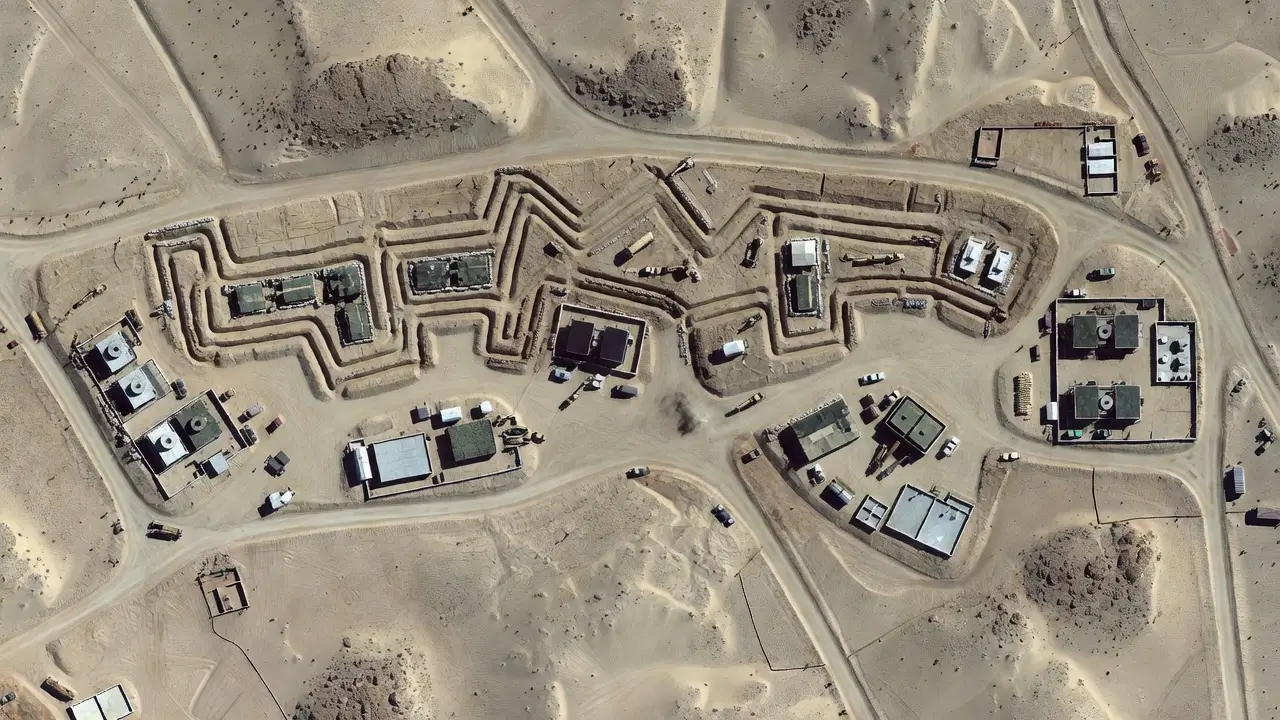
Recent satellite imagery has captured extensive repair and reinforcement efforts at several Iranian military and nuclear installations. These developments follow strikes by Israel in 2024 and the United States in 2025 during a brief conflict involving Israel and Iran. Experts analyzing the images note concrete structures and soil coverings designed to enhance protection against potential aerial attacks.
The work reportedly includes building a large concrete enclosure at the Parchin military complex southeast of Tehran. This site, long scrutinized by Western intelligence for possible nuclear-related testing, shows a new facility now hidden under layers of soil. Such measures suggest Iran aims to shield sensitive operations from surveillance and bombardment.
Iran has buried tunnel entrances at Isfahan.
News junkies, journalists, and content creators tired of posting into the void: one reporter used the Become a Reporter system to go from 0 to over 12 million monthly views on Threads with no ads and no big following. Get the full free case study now.
Developments at Nuclear Facilities
Satellite photos from commercial providers like Planet Labs indicate rapid progress at the Isfahan nuclear complex, one of three uranium-enrichment plants hit by US forces last year. Reportedly, all tunnel entrances there have been backfilled with soil by early February 2026, a move that could blunt the impact of future airstrikes. Analysts from the Institute for Science and International Security describe this as a tactic to complicate access for ground operations aimed at seizing enriched uranium.
Near the Natanz enrichment site, imagery reveals fortification of tunnel entrances under a nearby mountain. Vehicles including dump trucks and cement mixers appear active in recent weeks, hardening structures against penetration. These enhancements align with Iran’s stated goal of protecting its nuclear program, which it insists is for peaceful purposes only.
Missile bases show similar repairs.
Missile Base Repairs and Broader Context
At the Shiraz South missile base, satellite images reportedly depict reconstruction of logistics and command areas damaged in the 2025 conflict. The site, used for medium-range ballistic missiles, has not fully regained pre-strike capacity despite cleared debris and rebuilt structures. Similarly, the Qom missile base north of the city features a newly repaired roof on a key building, with work completed by late November 2025.
These fortifications occur as US-Iran nuclear talks in Geneva reach a critical phase. Washington seeks concessions on Iran’s program while warning of military options if negotiations stall. Iranian officials reportedly view the reinforcements as necessary defenses amid threats, though they continue diplomatic engagement.
Expert Analysis and Implications
David Albright of the Institute for Science and International Security reportedly stated that delaying talks allows Iran to bury facilities, making them harder to target. Other experts note the concrete “sarcophagus” at Parchin may house equipment for high-explosives testing, applicable to both nuclear and conventional weapons. Such dual-use potential heightens international concerns.
The reinforcements reflect Iran’s strategy to deter aggression while advancing capabilities. With US military preparations for possible extended operations, the risk of escalation remains high despite ongoing dialogue.
Media reporting for this story: 32% Left | 24% Right | 36% Center | 8% Unrated