
Follow TNGB
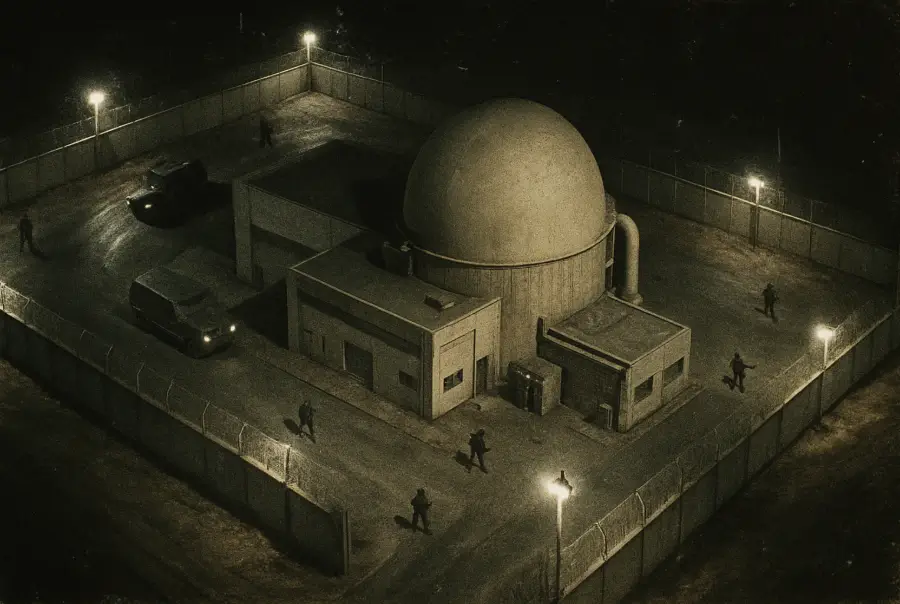
Israel’s Strikes Fail to Breach Iran’s Fordow Nuclear Site

Israel’s recent airstrikes on Iranian nuclear facilities have sparked intense debate about the feasibility of neutralizing Iran’s nuclear ambitions. The attacks, aimed at curbing Iran’s ability to develop nuclear weapons, targeted multiple sites but left the heavily fortified Fordow facility largely unscathed.
The Fordow Fuel Enrichment Plant, buried deep within a mountain near Qom, is Iran’s most protected nuclear site. Its subterranean chambers, estimated to be 80 to 90 meters underground, are designed to withstand conventional airstrikes.
Israel’s arsenal includes the U.S.-supplied GBU-28 bunker-buster, capable of penetrating roughly six meters of concrete. However, this falls far short of reaching Fordow’s deeply buried enrichment halls, where Iran reportedly enriches uranium to near-weapons-grade levels.
The only weapon believed capable of destroying Fordow is the GBU-57 Massive Ordnance Penetrator, a 30,000-pound bomb that can penetrate up to 60 meters of concrete. This advanced munition is exclusively in the U.S. Air Force’s inventory.
Delivering the GBU-57 requires the B-2 Spirit stealth bomber, a platform Israel does not possess. Retrofitting Israeli aircraft to carry this massive bomb is considered impractical, especially given Iran’s robust air defense systems.
Reports suggest Iran’s nuclear program has accelerated, with Fordow housing advanced IR-6 centrifuges enriching uranium to 60% purity, just shy of the 90% needed for a nuclear weapon. The International Atomic Energy Agency noted in 2023 that Iran had enriched uranium to 83.7% at Fordow, raising alarms about its intentions.
Israel’s strikes reportedly damaged above-ground facilities at Natanz and other sites, but Fordow’s underground infrastructure remains intact. Analysts argue that without U.S. involvement, Israel’s ability to dismantle Iran’s nuclear capabilities is limited.
The situation places the United States in a precarious position. Deploying the GBU-57 would mean direct U.S. military engagement in the conflict, escalating tensions and potentially drawing Iran into a broader retaliatory response.
Israeli officials, including Prime Minister Benjamin Netanyahu, have called the strikes a critical blow to Iran’s nuclear program. Yet, experts like Kelsey Davenport from the Arms Control Association emphasize that only U.S. firepower could decisively target Fordow.
Iran maintains its nuclear program is for peaceful purposes, a claim met with skepticism by Western intelligence agencies. The discovery of near-weapons-grade uranium at Fordow has heightened concerns about Tehran’s true objectives.
The Trump administration has signaled openness to diplomatic talks with Iran, but any U.S. decision to strike Fordow would require careful consideration of regional stability. For now, Israel’s unilateral actions have not eliminated the threat posed by Fordow’s fortifications.
As tensions simmer, the international community watches closely, aware that Fordow’s resilience could dictate the next phase of this high-stakes confrontation. The question remains whether diplomacy or military might will shape Iran’s nuclear future.

